1. Swashplate Operating Mechanics & Displacement Variation
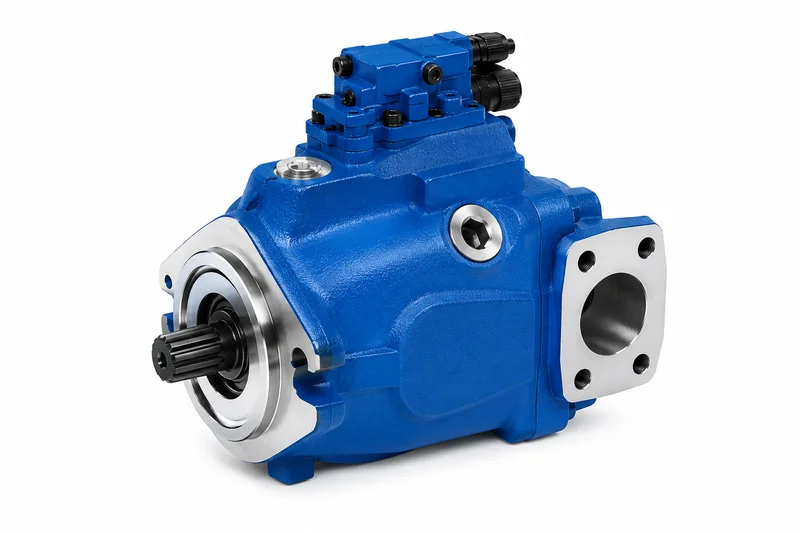
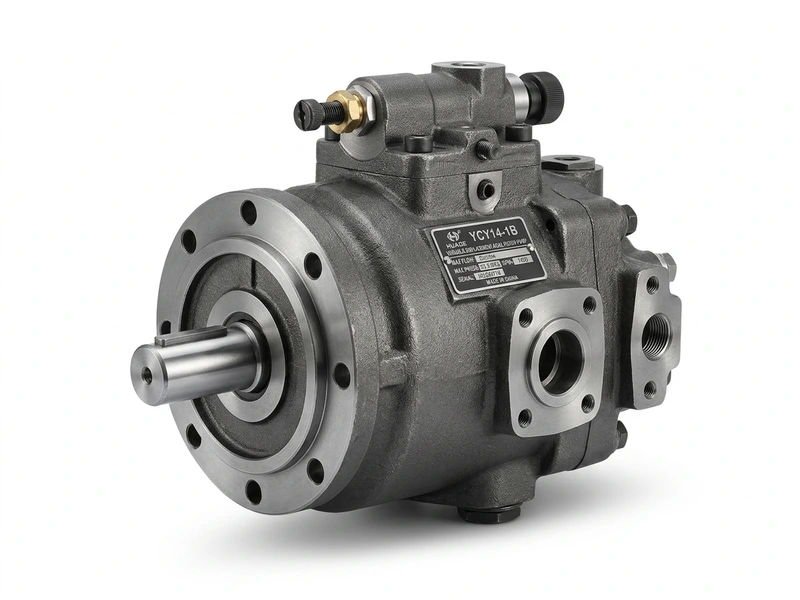
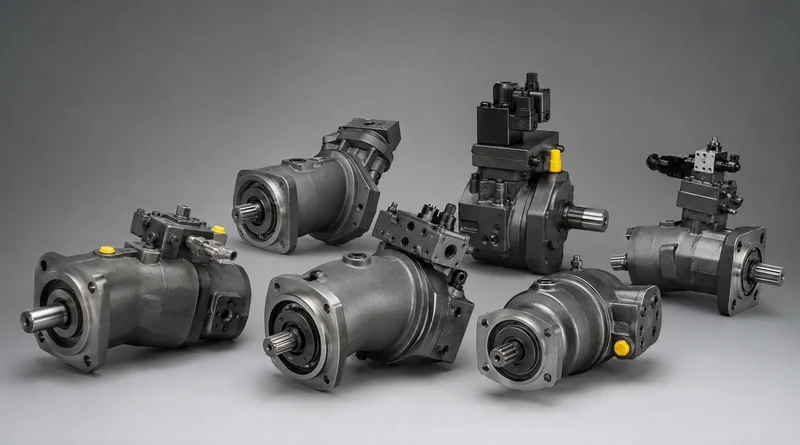
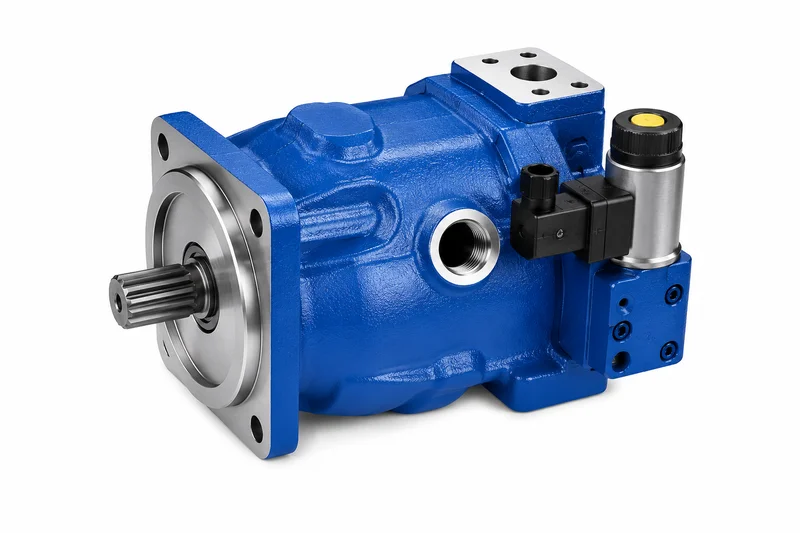
Variable displacement axial piston pumps operating on the swashplate design represent the gold standard for high-pressure industrial hydraulic circuits. Pistons arranged axially inside a rotating cylinder barrel make contact with an inclined swashplate via slipper pads. As the cylinder barrel rotates driven by the input drive shaft, the pistons reciprocate inside their bores, drawing hydraulic fluid from the suction port and forcing it out through the discharge valve plate.
The volumetric output per revolution is governed directly by the swashplate tilt angle (α). When the swashplate is perpendicular to the cylinder axis (α = 0°), piston stroke is zero, yielding zero displacement with the pump idling under zero load. Tilting the swashplate outward increases piston stroke length and volumetric output proportionally up to maximum displacement (typically 18° to 21°).
Flow rate is calculated as Q = (V_g × n × η_v) / 1000, where Q is flow (L/min), V_g is geometric displacement (cm³/rev), n is shaft speed (RPM), and η_v is volumetric efficiency (typically 0.93 to 0.96 for precision axial units).